No products in the cart.
Are you fascinated by the Arabic language and thinking about learning it in 2026? You’re not alone! Arabic is spoken by over 422 million people globally, making it one of the most valuable languages to learn for anyone interested in culture, business, or international relations.
Before you dive into learning Arabic, it’s crucial to understand the difference between Modern Standard Arabic (MSA) and Spoken Arabic. In this blog, we’ll explore both forms, highlighting their key differences and helping you decide which one to focus on in 2026.
What is Modern Standard Arabic (MSA)?
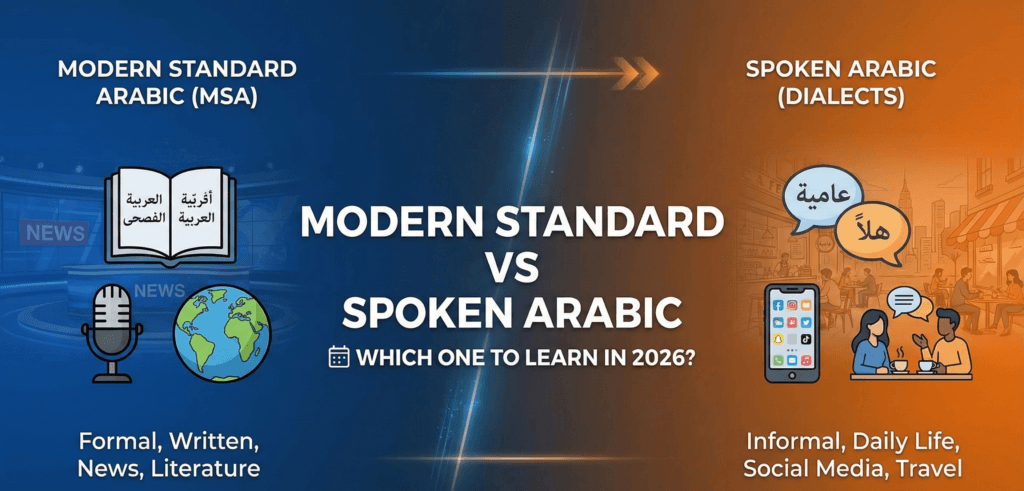
Modern Standard Arabic (MSA) is the formal version of the Arabic language. It is the official language used in most Arab countries for written communication, as well as in formal speech. MSA is typically used in:
- News broadcasts
- Literature
- Government documents
- Formal speeches
MSA is the most commonly taught form of Arabic worldwide and serves as a lingua franca across the Arab world. It allows speakers from different regions to communicate effectively, even if they speak different dialects. If you’re looking to learn Arabic for professional or academic purposes, MSA is likely the best choice.
What is Spoken Arabic?
Spoken Arabic, unlike MSA, refers to the everyday dialects spoken in various regions across the Arab world. These dialects are informal and can differ significantly from MSA. Some of the most widely spoken varieties include:
- Egyptian Arabic (spoken in Egypt)
- Levantine Arabic (spoken in Lebanon, Syria, Jordan, and Palestine)
- Gulf Arabic (spoken in the UAE, Saudi Arabia, and other Gulf countries)
These dialects are used in casual conversations, TV shows, and social media. If you’re planning to live or work in a specific Arabic-speaking country, learning the local spoken dialect can be beneficial.
Key Differences Between MSA and Spoken Arabic
1. Form & Formality
MSA: Formal, used in news, literature, and government settings.
Spoken Arabic: Informal, used in everyday conversations, TV shows, and social media.
2. Vocabulary
MSA: Standardized vocabulary, widely understood across the Arab world.
Spoken Arabic: Regional variations and colloquial terms specific to different regions.
3. Grammar
MSA: Strict grammar rules, with a focus on correct pronunciation and vowelization.
Spoken Arabic: More flexible grammar, influenced by local dialects.
4. Pronunciation
MSA: Standardized pronunciation, with clear and precise articulation of sounds.
Spoken Arabic: Varied pronunciation, with regional differences in accent and intonation.
5. Usage
MSA: Used in formal settings like official documents, news, and public speeches.
Spoken Arabic: Used in informal settings, such as family gatherings, everyday conversations, and social media.
6. Mutual Intelligibility
MSA: Widely understood across the Arab world, even by speakers of different dialects.
Spoken Arabic: Often not mutually intelligible between regions due to significant differences in vocabulary and pronunciation.
7. Learning Approach
MSA: Typically taught in formal educational settings, with a focus on reading, writing, and grammar.
Spoken Arabic: Best learned through immersion, language exchanges, or conversational-focused courses. ILC Classes offers both options to help you learn Arabic in the best way possible!
Which One Should You Learn in 2026?
Choosing between MSA and Spoken Arabic depends on your personal goals. If you’re interested in traveling or working across the Arab world, learning MSA is highly recommended. It will also help if you’re pursuing higher education, international relations, or a career that involves formal communication.
If you plan to live in a specific country or region, learning a local dialect of Spoken Arabic will allow you to connect more easily with native speakers and integrate into the local culture. Contact ILC Classes today to learn more about which Arabic course best suits your needs!
Conclusion
Arabic is a beautiful and rewarding language to learn in 2026. Whether you choose Modern Standard Arabic (MSA) or a local dialect, mastering Arabic will open new opportunities in travel, business, and culture. Start learning Arabic with ILC Classes today, and take the first step toward a successful and rewarding journey in language learning.